Share Article
So, what exactly is a paid product tester? In short, you're someone who gets paid to try out new apps, websites, and digital products and give your honest feedback. It’s a super flexible side hustle where your opinion directly helps companies iron out the kinks before a big public launch.
The best part? You don't need to be a tech wizard. You just need to be willing to share what you think.
What a Paid Product Tester Actually Does
Ever found yourself scrolling on your phone and thinking you could be doing something more productive? This is it. That’s the core of being a product tester. Companies, from tiny startups to big-name brands, are constantly building new apps, games, and websites. Before they push them live, they need real people to kick the tires and see what breaks.
Your job is to step into the shoes of a regular user. You might get a list of tasks, like signing up for a new account, trying to find a specific feature in an app, or going through the motions of making a purchase. While you're doing it, you just make notes on your experience—pointing out glitches, confusing instructions, or anything that feels clunky.
Your Opinion Is a Valuable Asset
You might be wondering why any company would pay for your two cents. Simple: launching a buggy or confusing product can cost them a fortune in lost sales and a damaged reputation. Your feedback is basically a form of quality control. You’re helping them spot problems their own developers are too close to see.
This role isn't about being a tech expert; it's about giving an authentic user's perspective. Companies are desperate to know how an average person interacts with their product, which makes your everyday experience your most valuable tool.
This feedback loop has become absolutely vital for modern businesses, and it's fueling a massive industry. The software testing market, which is where digital product testers fit in, is expected to explode from USD 54.44 billion in 2026 to a staggering USD 99.94 billion by 2031. That incredible growth just shows how much demand there is for people like you to test things before they hit the market.
How Klink Finance Simplifies the Process
This is where platforms like Klink Finance come in and make everything way easier. Klink is a global rewards platform where you can earn money online for doing simple tasks, which includes testing out new apps and offers from their partners. Instead of hunting through complicated testing sites, Klink brings the opportunities directly to you.
You just browse the tasks available, follow the instructions—like downloading a new game and hitting level 10—and get paid the moment you’re done. It takes all the guesswork out of the process and connects you straight to brands that need your help, letting you turn that spare time into actual cash.
Ready to give it a shot? Check out our guide on how to get paid for testing products.
Finding Legitimate Product Testing Opportunities
Alright, you’re ready to dive in and start making money as a paid product tester. The big question is: where do you actually find these gigs? A quick search pulls up a ton of options, but you’ll quickly learn they’re not all the same. The first skill to master is telling the real opportunities from the time-wasters.
Legit platforms have a certain feel to them. You'll notice they’re transparent about how you get paid, the website looks professional, and you can easily find reviews from other testers. Most importantly, a real company will never ask you to pay to join or force you to buy something just to get started.
Think you’ve got what it takes? This quick flowchart can help you decide.
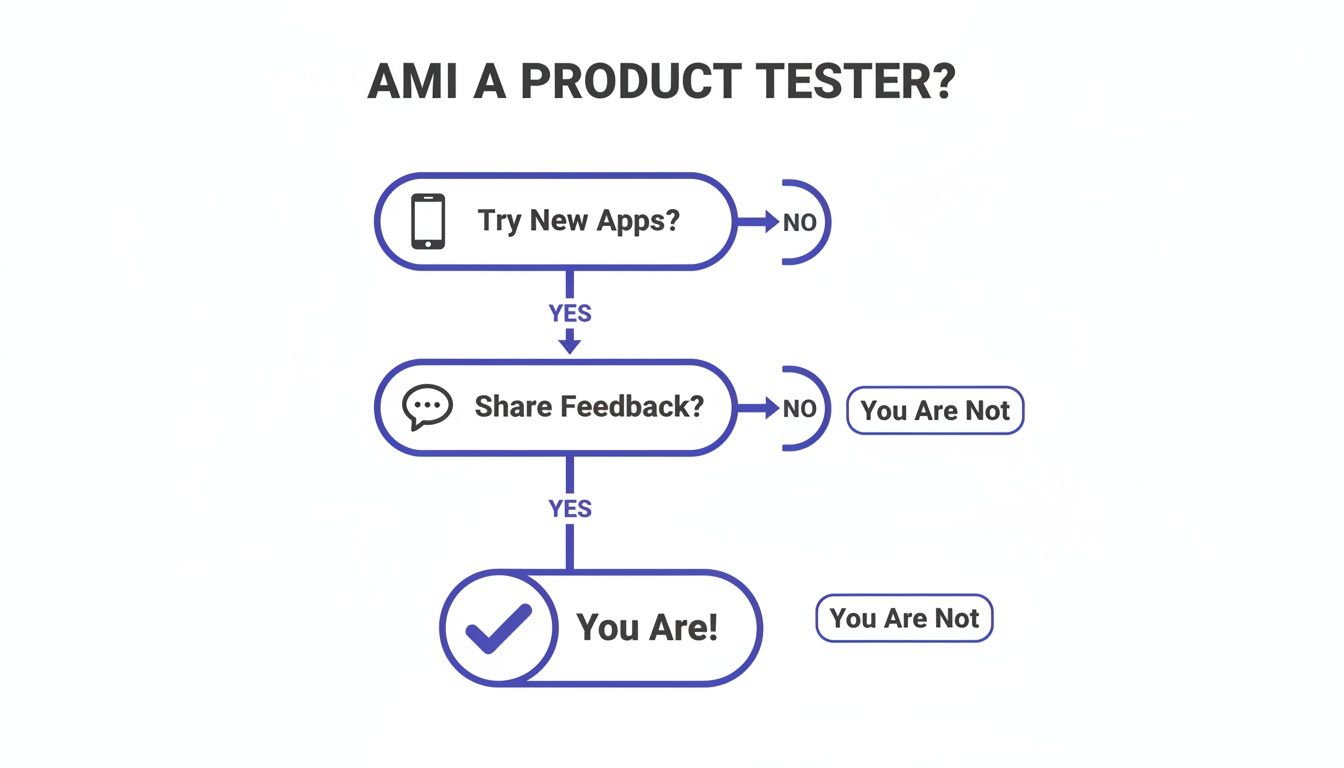
If you found yourself nodding along, you’re in the right place. Enjoying new things and sharing your honest thoughts are the only real requirements for the job.
Different Platforms for Different Goals
Not all product testing opportunities live in the same place. Knowing where to look helps you find gigs that match your schedule, payout preferences, and how much time you want to spend.
To make it clearer, here's a breakdown of the different types of platforms you'll come across.
Comparing Product Testing Platform Types
Platform Type | Primary Focus | Typical Payouts | Best For |
|---|---|---|---|
Dedicated User-Testing Sites | In-depth website and app usability tests (e.g., screen recordings). | Bank transfer, PayPal. | Testers who want fewer, higher-paying gigs and have a quiet space to record feedback. |
Market Research Panels | A mix of surveys, focus groups, and physical product tests. | Gift cards, points systems, cash payouts. | People who enjoy a variety of market research activities beyond just app testing. |
Multifaceted Rewards Apps | A constant stream of small, quick tasks, including app testing. | Cash payouts (PayPal, bank transfer), gift cards. | Anyone looking for flexible, consistent earning opportunities they can do in their spare time. |
The key takeaway here is about frequency versus depth. Dedicated sites like UserTesting or TestingTime might offer bigger payouts for a single test, but you might only qualify for a few each month. On the other hand, multifaceted rewards apps like Klink Finance are built to give you a steady flow of smaller, faster tasks. This makes it much easier to build up earnings consistently, even if you only have a few minutes to spare here and there.
Spotting the "Green Flags" of a Good Platform
When you’re checking out a new site or app, you need to look for signs that it’s the real deal. These are the green flags that tell you a platform is trustworthy and worth your time.
Clear Payment Info: The site should tell you exactly how much you’ll earn for a task and how you can cash out. No vague promises.
Zero Upfront Fees: This is non-negotiable. You should never have to pay to become a tester. They pay you, not the other way around.
Real User Reviews: Look for reviews on third-party sites like Trustpilot or Reddit. What are other testers actually saying about their experience?
Known Brand Partners: Legit platforms aren’t shy about showing off the well-known companies that use their service for feedback. It’s a huge sign of credibility.
Dodging the "Red Flags" That Scream Scam
Just as important is knowing what to run away from. Scammers love to target newcomers with promises that are too good to be true.
Watch out for platforms that demand way too much personal information upfront or promise crazy payouts like $200 for a five-minute app review. That just doesn’t happen. If it feels off, it probably is.
Choosing the right platform is the most important step. For more tips on earning safely, check out our guide on how to make money by completing tasks online. Stick with transparent platforms that have a proven track record, and you’ll set yourself up for a great experience as a paid product tester.
Creating a Tester Profile That Gets You Hired
Once you've found a few promising platforms, your next move is building a profile that actually gets you noticed. Think of it as your resume for the world of paid product testing. Companies aren't just looking for random people; they're searching for specific demographics that mirror their target audience. Your profile is the only tool that tells them you're the right fit.
A complete and honest profile is your golden ticket. It really is that simple. If a company is launching a new mobile game aimed at young adults, they’ll filter for testers aged 18-25 who own a modern smartphone. If you haven't filled out that information, you'll be completely invisible to them.
Detailing Your Demographics and Interests
The first layer of your profile is all about you. This is the basic information companies use for their initial targeting, and skipping these fields is one of the biggest mistakes new testers make. They are often the very first filter for paid opportunities.
Be thorough and, most importantly, accurate with details like:
Age and Location: These are the absolute fundamentals for market research.
Occupation and Education Level: Your professional background could make you the perfect candidate for testing B2B software or productivity apps.
Household Income: Some tests are designed for specific income brackets to gauge purchasing habits or reactions to pricing.
Hobbies and Interests: Listing interests like gaming, fitness, or cooking will directly connect you with relevant product tests in those niches.
This isn't just about pointless data collection. Klink Finance, as a global rewards platform, uses this information to match you with tasks and offers you’re most likely to enjoy and qualify for. It saves you from wading through irrelevant gigs and connects you straight to the money-making opportunities. For a deeper dive, you can learn more about how to choose the right offers in our dedicated guide.
Showcasing Your Tech Arsenal
Right after your personal details, your list of devices is the most critical part of your profile. Every single smartphone, tablet, computer, and gaming console you own is a potential key to a new testing gig.
Your tech inventory is what makes you a versatile paid product tester. The more devices you list, the wider the net you cast for potential invitations. A company testing an iOS-exclusive app can't use an Android user, no matter how great their profile is.
Keep this list meticulously updated. Did you just get a new iPhone or a Windows 11 laptop? Add it to your profile immediately. A tester with an up-to-date device list is far more valuable because they can provide feedback on the very latest software and hardware. Being proactive here directly translates to more invites and, ultimately, more chances to earn.
Delivering Feedback That Brands Value
Getting picked for a paid product test is just the first step. The real key to turning this into a steady side hustle is delivering feedback that brands can actually use. They aren't just paying for clicks; they're paying for insights that help them build better products. Nail this part, and you'll be the one they invite back for the bigger, better-paying gigs.
Most tests kick off with a set of instructions. A company might ask you to do something specific, like sign up for a new account, find a particular feature, or walk through the checkout process. Your job is to follow along and pay attention to everything. Did a button not work? Was a menu confusing? Or did something feel surprisingly smooth and easy? Those are the golden nuggets they're looking for.
From Generic Comments to Constructive Criticism
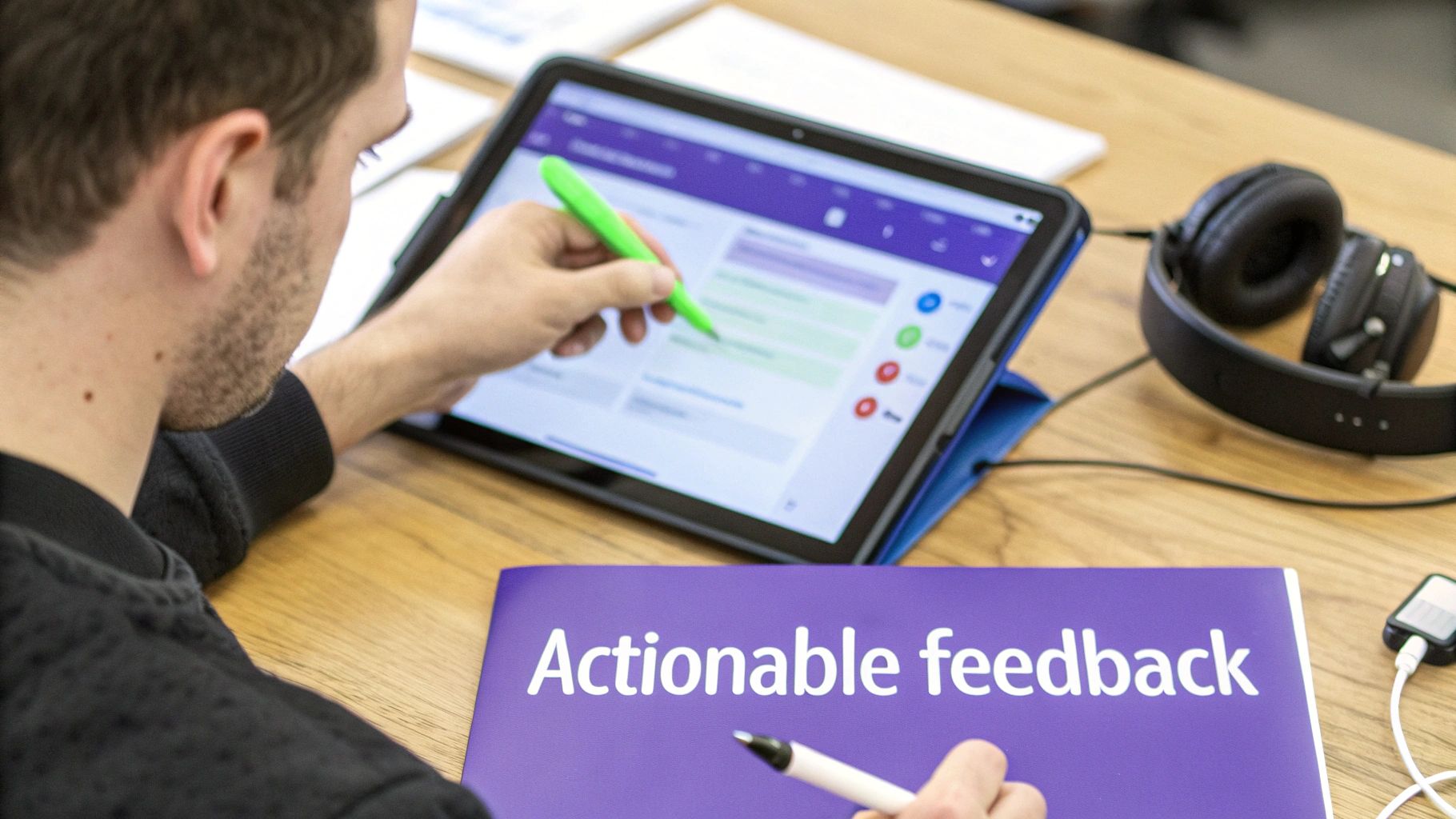
The line between a top-tier tester and one who never gets another job is detail. Vague feedback is useless. Specific, constructive feedback is priceless.
Let’s say you’re testing a new mobile banking app.
Generic (and unhelpful): "The app is confusing."
Constructive (and super helpful): "When I tried to add a new payee on the ‘Transfers’ screen, the ‘Save’ button was grayed out. I expected to tap it after entering the account number, but it stayed inactive. I had to back out and re-enter the info three times before it finally worked."
See the difference? The second example tells the developers exactly what went wrong, where it happened, and what the user expected. This is the kind of feedback that earns you a five-star rating. In a way, your feedback is a valuable piece of content, and understanding the basics of authentic UGC marketing can give you an edge in framing your reports.
Documenting Issues Like a Pro
When you hit a snag or find a bug, your report needs to be crystal clear. The best testers follow a simple framework to make sure their feedback is impossible to misunderstand.
What You Expected: Start by explaining what you thought was supposed to happen. This gives developers crucial context.
What Actually Happened: Describe the reality. Was there an error message? Did the screen freeze? Get specific.
Steps to Recreate the Problem: This is the most important part. List the exact steps you took, one by one, that led to the issue. This is a roadmap for the dev team to find and squash the bug.
Show, Don't Just Tell: A picture is worth a thousand words, and a video is worth a million. Always grab a screenshot or a quick screen recording of the problem.
The goal is to leave no room for interpretation. Clear, detailed documentation proves you're a professional and makes you the first person they'll call for the next project.
This entire model of outsourcing user feedback is blowing up. The global software testing market hit USD 55.8 billion in 2024 and is on track to hit USD 112.5 billion by 2034. Why? Because brands need real people to perform measurable actions, and that’s where platforms like Klink Finance come in. As a global rewards platform, Klink connects you directly with companies that need testers, rewarding you for completing simple tasks like installing an app or engaging with a new feature. It’s a straightforward way to tap into this growing market.
How to Maximize Your Earnings and Get Paid Instantly
Making a few bucks as a paid product tester is one thing. Turning it into a consistent, reliable side hustle is something else entirely. The real secret isn't about grinding away for hours; it's about being strategic. Think of it less like a random chore and more like a small business you're building in your spare time.
This means getting organized. You have to learn how to juggle multiple opportunities without burning out and, most importantly, figure out which gigs are actually worth your time. When you can spot the high-value tasks and use platforms that pay out right away, you can seriously boost your hourly rate and turn small pockets of free time into real cash.
Focus on High-Value and Quick-Win Tasks
Let's be real: not all testing gigs are created equal. Some will have you jumping through hoops for a couple of dollars, while others pay you decent money for simple, quick actions. The first skill to master is telling the difference.
When you’re just starting, quick wins are your best friend. They build momentum and keep you motivated. Look for gigs like:
App Installs: Super simple "download and open" tasks that pay you just for trying out a new app.
Game Progression: Get paid to play. These offers reward you for hitting a certain level in a mobile game.
Short Surveys: Quick questionnaires gathering basic opinions or demographic info.
These tasks are built for speed. That’s where a platform like Klink Finance really comes into its own. It serves up a constant stream of these straightforward offers, letting you stack up your earnings fast. You can knock out several of these in the time it takes to complete one long, drawn-out usability test, which radically increases what you can make per hour.
The Power of Instant Payouts with Klink Finance
There’s nothing more demotivating than finishing a bunch of tasks and then having to wait weeks to see your money. Instant gratification isn't just a perk; it's a powerful motivator. This is another reason why your choice of platform is so critical.
Klink Finance is a global rewards platform designed around immediate rewards. As soon as you complete an offer and it's verified, the money hits your account. No frustrating waiting periods, no minimum payout thresholds that feel impossible to reach. You’re in total control and can cash out whenever you like, whether you prefer USD, EUR, or another currency.
This instant feedback loop changes everything. Seeing your balance grow in real-time makes the whole process feel more like a game and less like a grind, which naturally encourages you to keep going.
With a bit of dedication, this side hustle can add up. Paid product testers in the U.S. can pull in an average of $20.00 an hour, showcasing the real potential here.
Amplify Your Income with Leaderboards and Promotions
The best rewards platforms give you more ways to earn than just the base pay for tasks. Always be on the lookout for features that help you multiply your income.
Klink Finance, for example, frequently runs special promotions and features leaderboards that give top performers bonus cash. Simply by staying active, you can climb the ranks and pocket extra rewards on top of what you’re already making from tasks.
And if you really want to maximize what you're earning online, don't be afraid to branch out. Exploring some smart affiliate marketing strategies can add another layer to your income. A smart approach is to combine a few different streams for more financial stability. We've put together a guide on other great apps that pay you real money to help you find even more opportunities.
Common Questions About Paid Product Testing
Jumping into the world of paid product testing usually brings up a few questions. You know how to find the gigs, build your profile, and give solid feedback. Now, let’s clear up the last few things you might be wondering about.
What Skills or Equipment Do I Need?
You really don't need a technical background to be a great paid product tester. The most valuable skills are already things you do every day: being observant, noticing details, and being able to explain what you're thinking.
If you can tell someone what you're seeing on your screen and why you like or dislike it, you're already most of the way there.
As for gear, you probably already have everything you need:
A modern smartphone (iOS or Android)
A laptop or desktop computer
A reliable internet connection
Some of the more involved tests might ask for a webcam or a microphone so you can record your thoughts out loud. Don't worry, the testing platform will always make this crystal clear before you even accept the gig.
How Much Can I Realistically Earn?
This is the big one, and the honest-to-goodness answer is: it really depends. Your earnings are a direct result of the platforms you use and how much time you dedicate.
A quick task like downloading and opening an app might only net you a dollar or two. But a more in-depth usability study where you spend an hour with a new website could easily pay $50 or more.
For someone just getting started, a solid, realistic goal is to aim for an extra $100-$300 a month. You can hit that by consistently using a few different platforms.
Apps like Klink Finance are perfect for this because they offer a steady stream of small, quick tasks. As a global rewards platform, Klink is built to provide these micro-gigs that can be finished in just a few minutes, which means you can stack up your earnings throughout the day whenever you have a spare moment.
Do I Have to Pay Taxes on My Earnings?
Yes, in most countries, the money you make from product testing is considered taxable income. When you do this kind of work, you’re typically seen as an independent contractor, not an employee.
That just means you're responsible for tracking your earnings and reporting them based on your local tax laws.
It's a really smart habit to keep a simple spreadsheet to log your income from each platform. Trust me, it makes tax time a whole lot less stressful and keeps everything professional.
When in doubt, it’s always a good idea to chat with a tax professional. They can give you advice tailored to your specific situation, saving you a ton of headaches down the road as you grow your new side hustle.
Ready to turn your opinions into cash? Klink Finance is a global rewards platform where you can earn money for simple tasks like trying new apps, playing games, and sharing your feedback. Get instant payouts and start earning today. Join now at Klink Finance.


High Quality Offers,
Real Payouts
Start Earning with Klink Now!







Share Article
Related Articles
Read more, Earn more