Which app should you use if you want to play games and earn gift cards?
The highest payout on paper is rarely the best choice. A better starting point is fit: how you already play, where you live, and whether you want retailer gift cards, broader cash options, or rewards tied to one ecosystem.
The distinction is important because “play games earn gift cards” apps are not all built for the same job. Some work best for casual mobile play and small redemptions. Some reward people who do more than play, such as testing apps or finishing extra tasks. Others only make sense if you already spend time in a platform like Xbox.
That difference decides whether an app feels rewarding or feels slow.
Beginners usually lose time in two places. They pick a platform that does not support their country well, or they choose one with rewards they do not want. A gift-card-first app can be fine if you already shop with those retailers. It is a poor fit if you want more flexibility. A wider platform such as Klink Finance can make more sense if payout options matter as much as the games themselves.
Keep expectations realistic. These apps can turn existing play time into small rewards, but they are not a reliable replacement for steady income. The practical use case is simple: if you were going to play anyway, use a platform that gives some value back.
This guide takes a more useful approach than a basic roundup. It compares apps by earning style, payout type, and location fit. It also covers the part many beginners worry about most: how to spot weak offers, tracking problems, and scammy apps before you waste your time.
The list below focuses on legitimate options with clear trade-offs.
1. Klink Finance
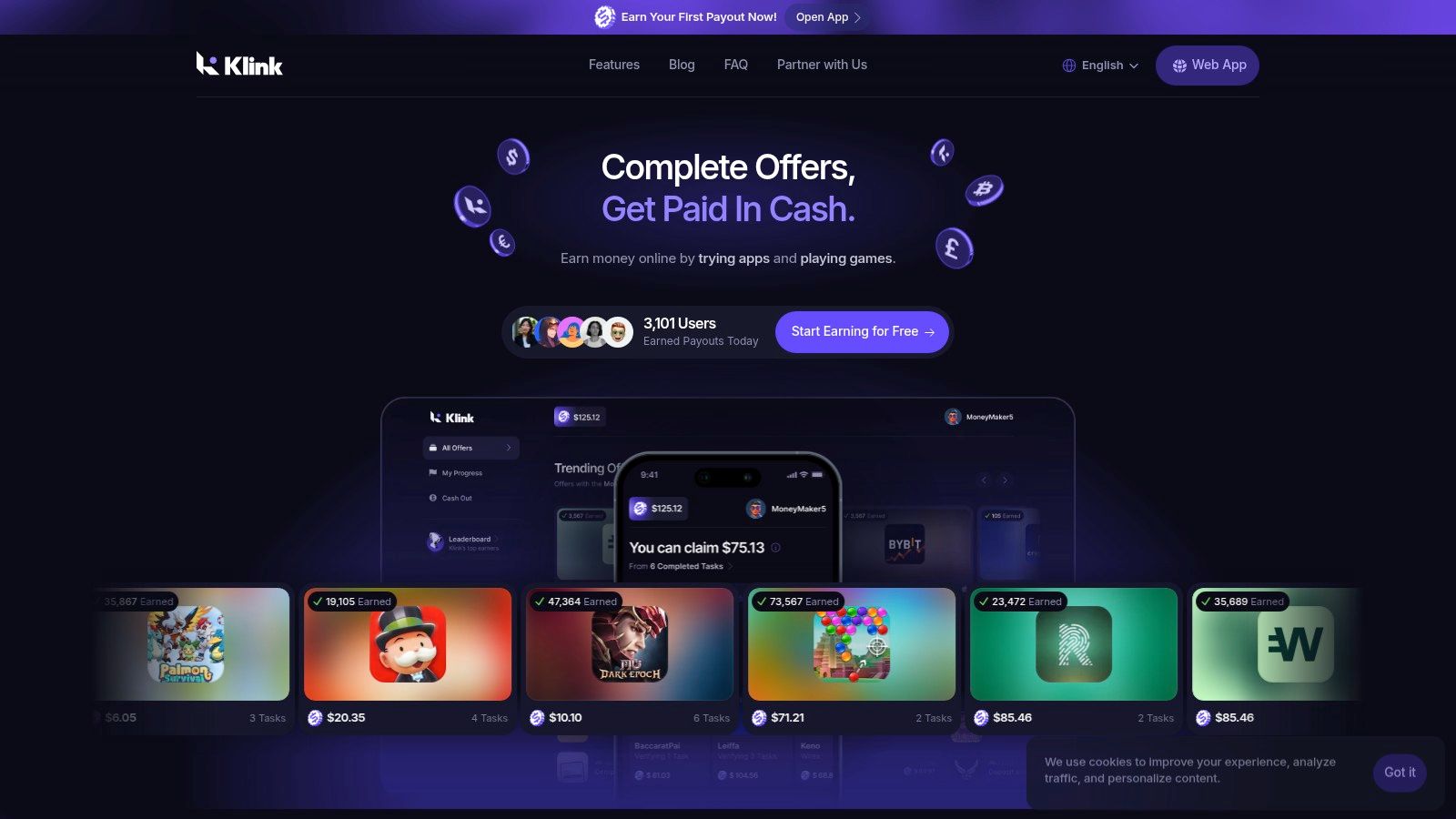
Klink Finance is a global rewards platform where you earn by playing games, trying apps, answering surveys, and completing social quests. It works on web, iOS, and Android, which immediately makes it more flexible than game-only apps tied to one device type.
For beginners, the biggest advantage is choice. You aren't boxed into one reward format. If you want gift-card-like value, you can go that route through flexible withdrawals. If you prefer direct cash-style payouts in supported currencies, that option is there too.
Why Klink Finance stands out
A lot of rewarded gaming apps are narrow. They assume you're in one country, using one app store, and happy with a limited reward catalog. Klink Finance takes a wider approach.
The platform supports withdrawals in 20+ currencies, including fiat options like USD, EUR, and GBP, plus other digital payout options. That matters if you're in the US, UK, Germany, France, or somewhere else entirely and don't want your effort trapped inside one retailer ecosystem.
Klink also emphasizes real-time tracking. That's a practical feature, not just a marketing line. In this category, frustration usually starts when users can't tell whether an install tracked, whether a milestone counted, or whether a reward is pending. A live dashboard reduces that uncertainty.
Practical rule: If an app doesn't make tracking obvious, treat it as a backup platform, not your main one.
Klink lists more than 1,010 tasks, 30,000+ registered users, payouts of $134,000+, and availability across 130+ countries on its own platform. Those details make it easier to understand what kind of marketplace you're joining, especially if you want more than just one or two game offers at a time.
Best fit for beginners and side hustlers
Klink works best for people who don't want to rely on a single earning method.
If you only want to play one game for one gift card, a dedicated gaming app may feel simpler. But if you want to stack activities, game offers, app installs, surveys, and social tasks, Klink is stronger because it lets you switch when one offer type dries up.
That solves a common beginner problem. Offer inventory changes. A game app can feel great for a week and slow the next week if the available titles don't suit you. On Klink, you can keep moving instead of waiting for a better game catalog to appear.
Another plus is the built-in sense of progression. Promotions and leaderboards add a useful layer for active users. If you like checking in daily and optimizing your time, that structure helps.
What to watch before you commit time
Klink isn't magic. Earnings still depend on your region, the offers currently available, and how closely you follow the required steps. You also shouldn't treat any example earnings as guaranteed results.
The other thing I'd check early is the withdrawal rules in the help materials before going deep. The public site doesn't spell out every fee detail or minimum threshold as clearly as some users might want, so it's smart to review the terms and support content first.
A few practical pros and cons make the trade-off clear:
Best strength for global users: Klink isn't built only for one country, which is rare in this space.
Best strength for flexibility: You can switch between games and other task types instead of depending on one category.
Main limitation: Reward volume still varies by country and campaign availability.
Main caution: Read payout and withdrawal terms before treating it as a primary side-income app.
Klink Finance is strongest when you want one account that can handle rewarded gaming plus other simple online tasks, without forcing you into a single store card.
If your goal is to play games earn gift cards but keep your options open, Klink Finance is the most flexible starting point on this list.
2. Mistplay
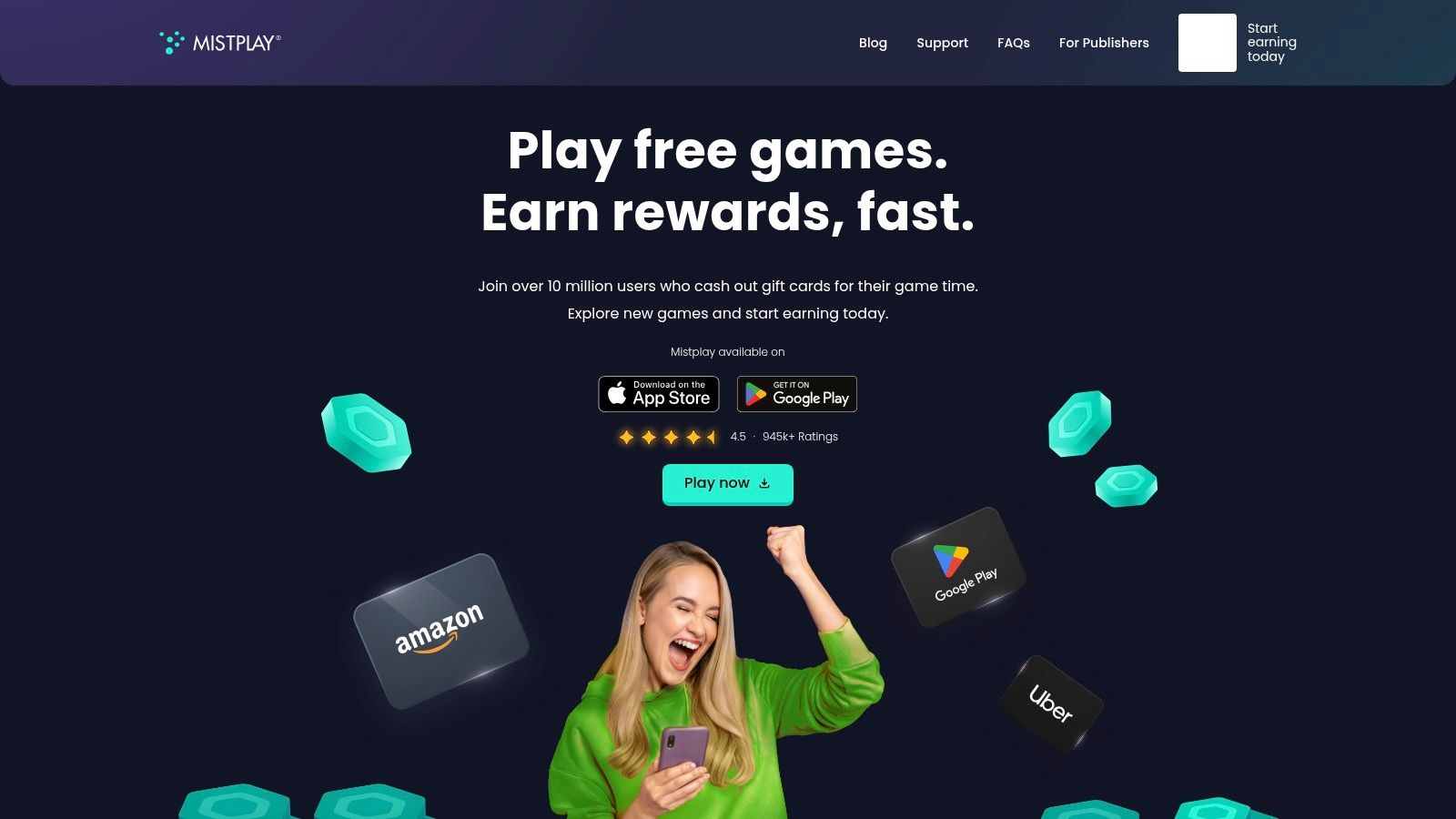
Mistplay is one of the most recognizable names in this category, and it earns that reputation by keeping the experience focused. You install the app, pick from recommended Android games, and earn points by playing and reaching milestones.
That focus is also the main reason some people love it and others outgrow it. If you want a game-first loyalty app with a clean mobile experience, Mistplay is easy to understand. If you want wider payout flexibility, it can feel limited.
Who Mistplay works best for
Mistplay is strongest for Android users who already enjoy trying new mobile games. The app is built around discovery and progress, not around broad side-hustle tasks.
That means it feels smoother than many general reward platforms when your only goal is gameplay. Recommendations, in-app progress tracking, and reward redemption all stay inside a simple loop.
The trade-off is obvious. If you're on iPhone, this isn't the natural first pick. And if you hate rotating into new games, you'll probably leave value on the table.
For readers comparing game-focused options, this guide on how to earn gift cards by playing games helps show where dedicated apps and broader rewards platforms differ.
What it does well and where it falls short
Mistplay benefits from being mature and familiar. That's useful because beginners often overestimate how much they want complexity. A straightforward app with a clear rewards tab is often better than a feature-rich app that hides the basics.
It also helps that gift card redemption is a normal part of the product, not an afterthought. The app's own support and onboarding explain eligibility and progress clearly enough for most users to get started without much confusion.
Mistplay is a good fit if you want your rewards app to feel like a game launcher, not a side-hustle dashboard.
A few trade-offs matter before you install:
Best for Android gamers: The experience is built around Android mobile play.
Strong point: Curated recommendations reduce decision fatigue.
Less ideal for flexibility: Rewards depend on eligible titles and milestone pacing.
Main drawback: No Android, no real reason to choose it.
Mistplay's own blog says most rewards are approved within 48 hours after redemption, which is a practical detail many beginners care about when comparing reward delivery speed. If your goal is simple, casual mobile play with gift card rewards and you use Android, Mistplay is still one of the safer mainstream choices.
3. Rewarded Play by Influence Mobile
Want a rewards app that tells you exactly what to do next?
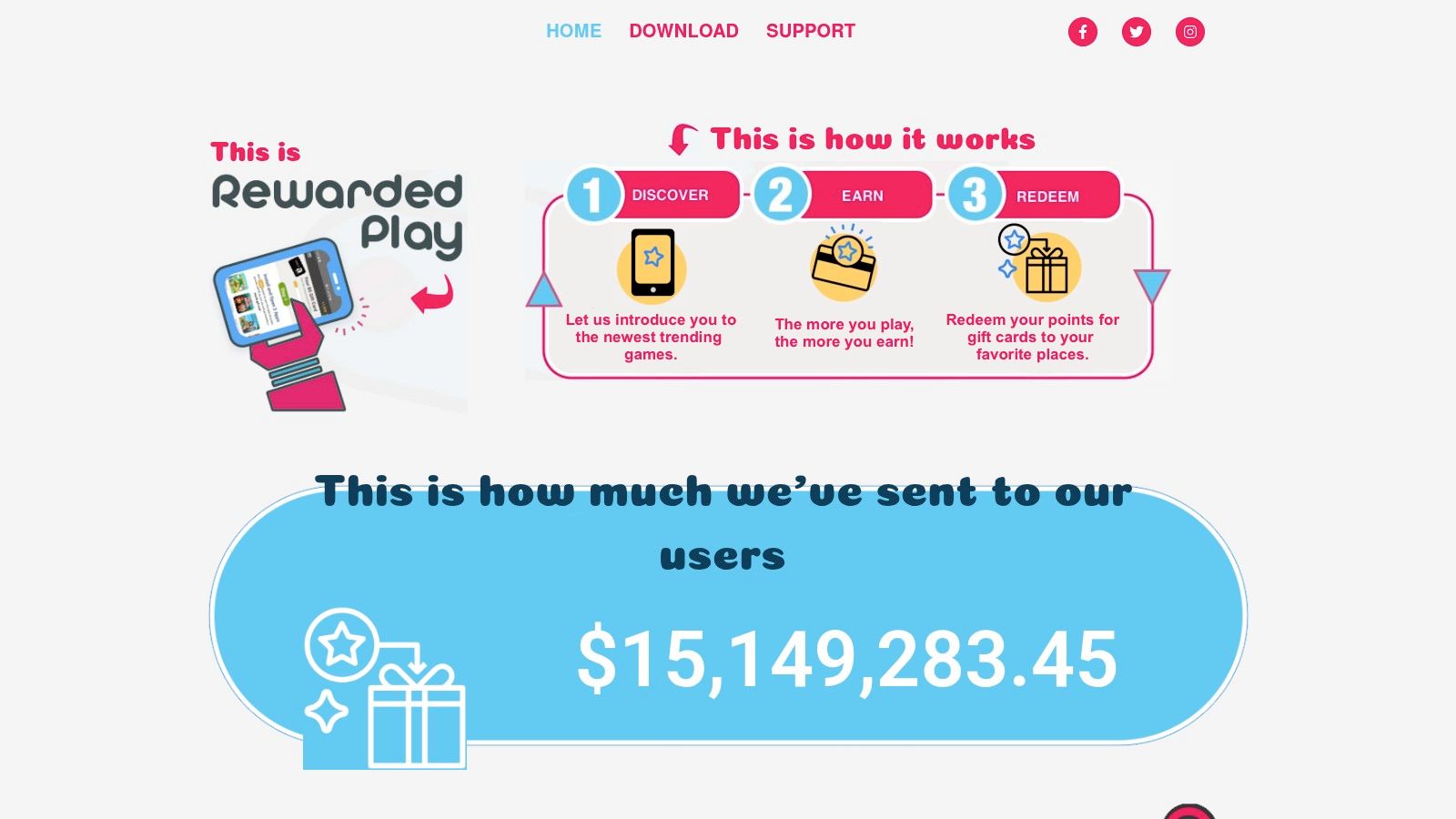
Rewarded Play appeals to that type of user. It is built around specific milestones, not open-ended play. You install featured games, complete the listed goals, and convert points into gift cards. For beginners, that structure can be easier to manage than apps that leave you guessing which game is worth your time.
The trade-off is simple. A guided system helps casual players stay organized, but it also gives you less freedom. If you like hopping between games without checking task requirements, this app can feel restrictive fast.
Where Rewarded Play fits best
Rewarded Play makes the most sense for Android users who want retailer gift cards and do not need cash-out flexibility. That puts it in a different category from platforms built around PayPal, crypto, or broader earning options.
That distinction matters if you are choosing based on your end goal, not just the app store rating. A casual user who wants an occasional Amazon or Walmart gift card may find Rewarded Play easier to use than a more flexible platform with a steeper learning curve. A dedicated earner may outgrow it once the highest-value offers slow down.
If you are comparing that broader category, this guide to mobile games that pay real money helps clarify where gift card apps and cash-oriented apps start to diverge.
The practical trade-offs
A few things stand out once you use the app for a week or two:
Best fit: Android users who prefer task-based progress over browsing for deals
Strong point: Clear milestones make it easier to know what earns and what does not
Limitation: Rewards depend on available partner games, so earning potential changes over time
Less ideal for: Players outside supported regions or anyone who wants flexible withdrawals instead of gift cards
I also like that Rewarded Play keeps its support and rewards information visible. That helps when a game install fails to track or a completion takes time to register. In this niche, basic transparency matters more than flashy branding.
Rewarded Play is a practical choice for steady casual players who are comfortable following milestone instructions exactly.
Beginners should pay close attention to tracking. Install games through the app, allow the permissions required for offer tracking, and follow the listed objective rather than your own shortcut. If the app says reach a certain level, finishing a different achievement usually will not count.
This is also where scam awareness matters. A legitimate platform explains how rewards are earned, what the payout options are, and how support works when tracking breaks. If an app promises unusually high gift card earnings without clear terms, skip it.
If that structure matches your goals, Rewarded Play is a solid Android option.
4. Fetch Play inside Fetch Rewards
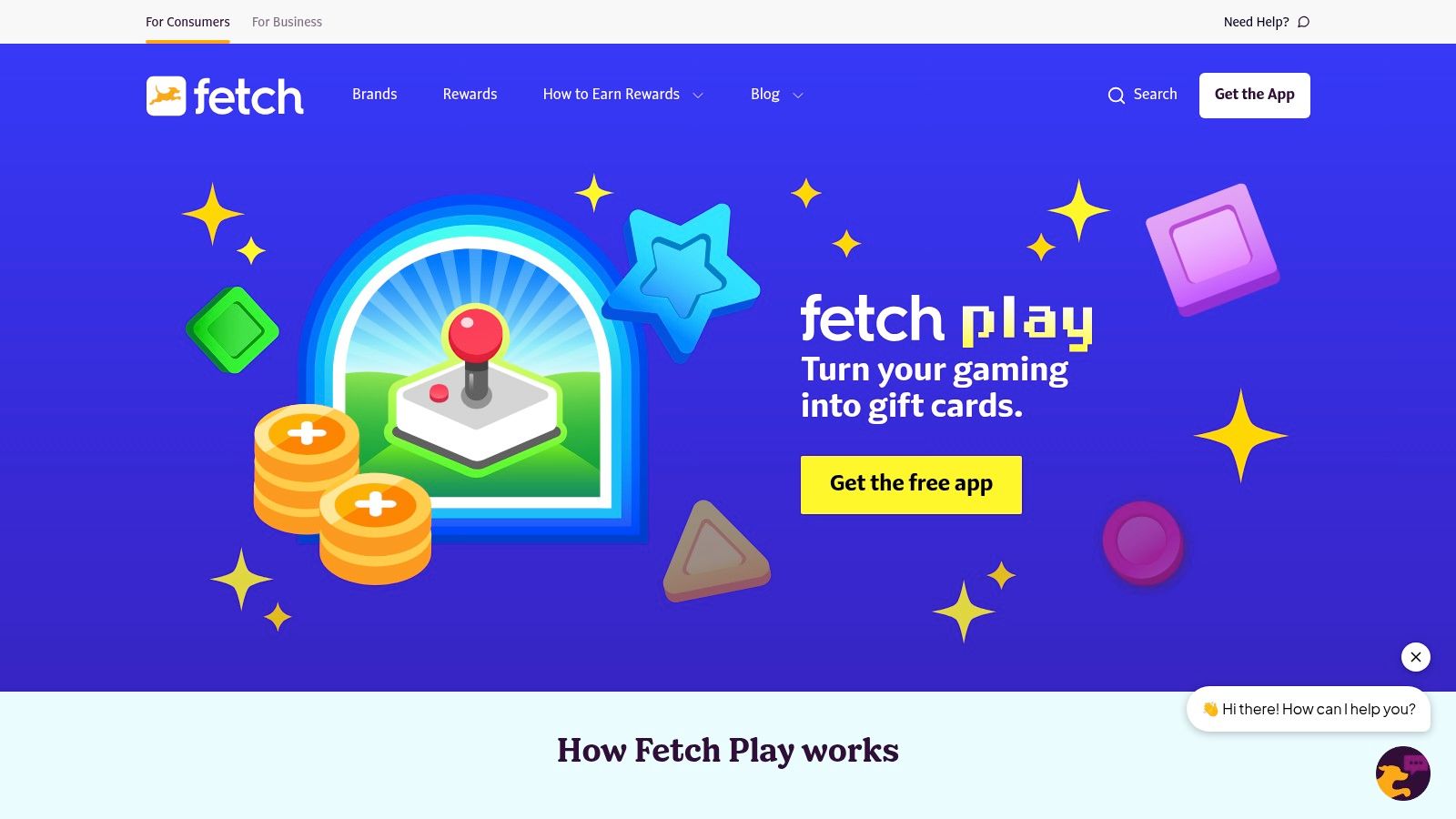
Fetch Play makes more sense when you stop thinking of it as only a gaming app. It's a gaming feature inside Fetch Rewards, which means its real value comes from stacking gameplay with other earning actions in the same account.
For a lot of users, that's the whole appeal. You can play games, scan receipts, and build toward rewards faster than you would with gaming alone.
Why Fetch Play feels efficient
According to Fetch's own published guide, users report earning 3,000 or more points per week through gameplay alone, and combining that with receipt scanning can lead to $5 to $10 gift cards quickly through Fetch Play inside the Fetch app. That's one of the clearest practical examples in this niche because it shows how stacking changes the experience.
It also explains why Fetch Play works well for people who already use Fetch for shopping rewards. You're not starting from zero every time you want a gift card.
This is also one of the easier apps to understand at the action level. Install through the Fetch Play section, complete the listed in-game tasks, and watch your points update inside the same ecosystem.
For more ways mobile rewards apps work, this article on mobile games that pay real money pairs well with Fetch's model.
What beginners often miss
Fetch Play is not forgiving about installs. Previously installed titles are typically not eligible. If you don't start from the Fetch flow, you may end up playing for nothing.
That's a common beginner mistake across reward platforms, but it matters even more here because Fetch's process is very specific. The app does explain this, but people still skip it.
A few practical notes help set expectations:
Best for stackers: Fetch Play shines if you also use receipt scanning and offers.
Best for mainstream rewards: The gift card catalog is familiar and easy to use.
Main limitation: It works best inside the Fetch system, not as a standalone earning strategy.
Main mistake to avoid: Installing games outside the app flow.
Start only with games you have never installed before through your current device and account setup. That's the safest habit on nearly every milestone-based rewards platform.
If you want one app that combines shopping-style rewards with gameplay, Fetch Play is one of the more practical choices.
5. Swagbucks Games
Want one platform that lets you play games for gift cards without betting everything on games alone?
Swagbucks fits that job well. Its game offers sit inside a larger rewards system that also includes surveys, shopping, search, and seasonal promos. That makes it a practical choice for beginners who want options, and for selective users who prefer to compare offers instead of committing to one game app.
Your platform choice should align with your goal. If you want a casual path to gift cards, Swagbucks gives you multiple ways to make progress. If you want a dedicated gaming app with a cleaner, game-first setup, another option in this list may fit better.
Best for selective users, not constant grinders
Swagbucks works best if you treat it like a marketplace.
Some game offers are solid. Others look good at first, then ask for too much time, too many level jumps, or spending to finish on schedule. The trade-off is simple. You get more variety, but you also have to judge offer quality more carefully than you would on a narrower platform.
That broader rewards model is also why Swagbucks has lasted. As noted earlier, demand for gaming gift cards remains strong, and general rewards platforms benefit because they can serve users who want games plus other earning routes in one account.
If you're comparing broad reward sites with game-focused apps, this guide on how to get paid to play games online is a useful next read.
Where beginners lose time
The main risk is chasing headline payouts without reading the conditions.
On Swagbucks, the best-looking offer is not always the best use of your time. Check the install rules, reward steps, deadline, device limits, and whether progress depends on purchases. If those details look messy, skip the offer.
This is also where scam concerns and normal frustration can get mixed up. Swagbucks itself is established, but individual offers can still disappoint if the requirements are unrealistic for your play style or region. Beginners should start with smaller offers first, confirm tracking works on their device, then decide whether bigger campaigns are worth it.
A simple filter helps:
Choose Swagbucks if: you want gift cards and like having backup earning methods besides games.
Skip it if: you want a focused mobile gaming experience with less decision-making.
Watch for: offers that look generous but are hard to finish without paying.
Used carefully, Swagbucks is a good fit for casual earners and deal-checkers. Used impulsively, it becomes a time sink fast.
6. InboxDollars Games
InboxDollars sits closer to the casual end of this list. It isn't trying to turn you into a dedicated mobile grinder. It gives you simple browser and mobile games, then lets those fit into a wider rewards account that also includes surveys, offers, emails, and videos.
That makes it more approachable for beginners who don't want to learn a complicated loyalty system.
When InboxDollars makes sense
InboxDollars is strongest if your idea of “play games earn gift cards” is light and occasional. Maybe you play a few mini-games, then do another easy task later. That style fits the platform better than a heavy optimization approach.
It also helps that the platform explains game crediting and timing in its support materials. Clear rules matter because casual users are the most likely to assume every click pays instantly.
Unlike some game-only apps, InboxDollars can also appeal to users who want a cash redemption path instead of only store-specific rewards. For some people, that's enough reason to choose it over a more gaming-focused app.
The parts that frustrate users
InboxDollars can feel slow if you expect games alone to carry your earnings. In practice, it's better as a mixed-use rewards site than as a serious gaming earner.
The initial cash-out minimum also matters. If you're testing the platform casually, hitting that first threshold can feel slower than expected. That's not a scam signal by itself. It's just a sign that the product is designed around account activity across several categories.
A few honest takeaways:
Best for casual use: Good if you want games plus other simple tasks.
Good for variety: You aren't locked into one rewards path.
Less ideal for dedicated gamers: Mini-games alone usually won't feel like enough.
Main patience test: Credit timing can vary.
If you want a light rewards site where gaming is part of the mix rather than the whole strategy, InboxDollars can still be useful.
7. Microsoft Rewards Xbox and Game Pass Quests
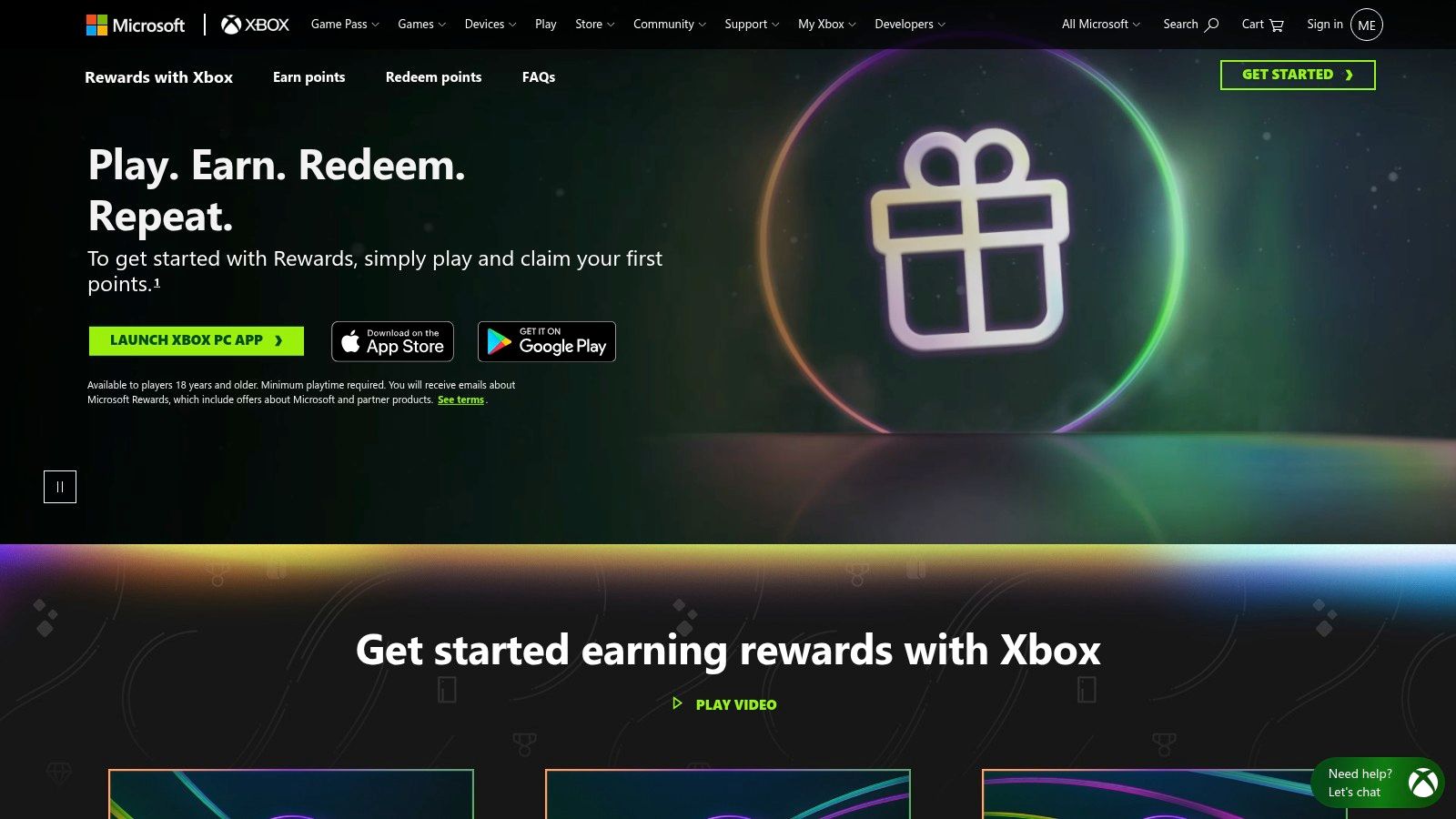
Microsoft Rewards is the outlier on this list because it isn't built around trying random mobile partner games. It's a first-party rewards program tied to Xbox, Game Pass quests, Bing, and Microsoft purchases.
That makes it excellent for one type of user. Existing Xbox players.
Why Xbox users should pay attention
If you already spend time in the Microsoft ecosystem, this is one of the lowest-friction ways to turn normal activity into rewards. You don't need to learn a new side-hustle platform. You just complete quests and earn points through the services you're already using.
That first-party relationship matters. In a space where beginners worry about trust, official programs carry less uncertainty than unfamiliar apps.
If your console has issues while you're relying on Xbox quests, this practical Perth's best console repair guide may help you troubleshoot your next step.
Why it isn't for everyone
Microsoft Rewards is not the best answer if you're starting from zero and only want gift cards from playing games. Its value depends heavily on whether you already use Xbox, Game Pass, Bing, or the Microsoft Store.
Program rules and point costs can also change over time. That's another reason I treat it as a bonus for existing users, not as a main earning plan for everyone.
Use Microsoft Rewards when it overlaps with habits you already have. Don't force new habits just to chase points.
It's also worth keeping the larger trend in mind. Research on play-to-earn gaming projects a 24.6% CAGR through 2026, which shows rewarded gaming models are expanding. But platform fit still matters more than market growth. A growing category doesn't automatically make every program a good choice for your setup.
Here's the clean verdict:
Best for: existing Xbox and Game Pass users.
Strongest advantage: official ecosystem, simple quests, familiar rewards.
Weak point: limited value if you don't already use Microsoft's services.
Practical mindset: treat it as a loyalty bonus, not a standalone side hustle.
If that's your ecosystem already, Microsoft Rewards is one of the easiest programs to keep running in the background.
Play Games for Gift Cards: 7-App Comparison
Service | Platform | Implementation complexity | Resource requirements | Expected outcomes | Ideal use cases | Key advantages |
|---|---|---|---|---|---|---|
Klink Finance | Web, iOS, Android | Low, simple sign-up and task completion | Internet, smartphone/PC; offers vary by region | Cash or crypto payouts; typical passive ~$100/mo, top users up to ~$1,000/mo (variable) | Side-hustlers, students, app testers who want flexible withdrawals | Multi-currency cashouts (fiat & crypto), real-time tracking, gamified boosts |
Mistplay | Android only | Low, install games and meet in‑game goals | Android device, time spent playing eligible titles | Gift cards (units → popular retailers); steady but game-dependent | Mobile gamers focused on playing recommended Android titles | Curated game recommendations, in-app progress tracking, frequent promos |
Rewarded Play (Influence Mobile) | Android only | Low, play partner games and reach goals | Android device, playtime for milestones | Gift cards to major US retailers; predictable goal-based rewards | Casual players wanting mainstream gift cards with transparent flows | Clear help docs, large mainstream gift-card catalog |
Fetch Play (Fetch Rewards) | iOS & Android (via Fetch app) | Low–Medium, install via Fetch and complete tasks | Fetch app required, installs must route through Fetch; US-focused | Fetch points redeemable for US gift cards; faster when combined with receipt points | Users who also use receipt-scanning to accelerate redemptions | Combines game + receipt earnings, large US gift-card catalog |
Swagbucks (Games) | Web & Mobile | Low, mix games with other earning channels | Smartphone/PC; multiple activities (surveys, shopping, videos) | SB points redeemable for many gift cards; can stack channels for faster redemptions | Users who want diverse earning streams beyond gaming | Broad rewards marketplace, many redemption options, long history |
InboxDollars (Games) | Web & Mobile | Low, play mini‑games and use other site features | Browser or mobile, consistent play; US-focused; initial cash-out min | Gift cards or cash; progress via scratch meter; modest earnings | Casual players combining games with surveys and offers | Cash redemption option, clear documentation on crediting |
Microsoft Rewards (Xbox / Game Pass Quests) | Xbox, PC, Web (integrated) | Low–Medium, link accounts and complete quests | Xbox/PC access; Game Pass enhances opportunities; Microsoft account | Points redeemable for Xbox/Microsoft gift cards and other rewards; predictable weekly/daily quests | Xbox players who want first‑party, low-friction rewards | First-party integration, predictable quests, points across Microsoft services |
Final Thoughts
Which app should you start with?
Use a simple filter. Decide how you want to earn, how you want to cash out, and whether the app works well in your country. That does more for results than chasing the biggest headline offer.
The biggest mistake beginners make is picking a platform for the promise, not the fit. An app can be legitimate and still waste your time if it supports the wrong device, pays in rewards you will not use, or has tracking rules that do not match how you play.
A practical way to choose looks like this:
Pick based on your goal: Casual players usually do better with low-effort apps they can check in on a few times a week. More dedicated users should look for platforms with more offer volume and more than one earning method.
Pick based on payout preference: If you mainly want retail or gaming gift cards, a game-focused app may be enough. If you want more flexibility, use a platform that also offers other reward types or broader redemption choices.
Pick based on location: Country support changes everything. Some apps work well in the US but feel limited elsewhere because offers and gift card catalogs are narrower.
Pick based on friction: The best option on paper is still a poor choice if the install flow, milestone tracking, or redemption process is unreliable on your device.
That last point is where many people get frustrated.
Rewarded gaming is usually straightforward, but it is not automatic. Good apps explain what counts, how long tracking may take, and what disqualifies an offer. Bad apps stay vague, promise too much, and make support hard to reach. If the pitch sounds like easy money for almost no effort, leave.
A few habits improve your odds right away:
Read the terms before installing: Many missed payouts happen because the game was already installed, the install did not start from the app, or the wrong milestone was completed.
Test one platform first: Learn how one app tracks before adding another.
Keep basic notes: If an offer fails to credit, it helps to know when you installed it, what task you finished, and what the reward amount was.
Redeem early if you can: The first successful cash-out confirms the app works as expected on your device and in your region.
Treat it as side money: These apps fit spare time well. They are a poor choice for fixed monthly expenses.
The category itself is sticking around. As noted earlier, digital gift cards and app-based rewards continue to grow, which is why platform choice matters more than app-store hype.
If you want a broader view of how this fits into the wider gaming economy, this look at how gamers earn money online adds helpful context.
Klink Finance is still worth a look if you want one platform that includes games, apps, surveys, and social tasks in the same account. That matters for users who do not want to depend on game offers alone.
The right app is the one you will use consistently, that tracks cleanly, and that pays out in rewards you care about. Start there. Then adjust once you have one successful redemption and a clear sense of what fits your habits.
FAQs
Are play games earn gift cards apps actually legit
Some are. The legitimate ones explain how rewards are earned, which actions count, and how redemption works. The risky ones promise unrealistic income or stay vague about tracking and payouts.
Which app is best for beginners
Klink Finance is a strong starting point if you want flexibility. Mistplay and Rewarded Play are easier if you want a more game-only experience on Android.
Can I use these apps outside the United States
Some platforms are more global than others. Always check payout options and country support before spending time, because many apps are still heavily US-focused.
How much can I realistically expect to earn
Think of this as extra income from spare time, not a replacement for a job. Your results depend on your country, device, available offers, and how closely you follow the requirements.
Why didn't my game reward track
The most common reason is missing one of the required steps. You may have installed the game outside the app flow, skipped a permission, used a previously installed game, or not completed the exact milestone.
Should I pick one app or use several
Start with one. Learn how its tracking and redemption work first. Once you know what fits your style, adding a second platform becomes much easier.
Are gift cards better than flexible payouts
That depends on how you want to use your rewards. Gift cards are simple if you already shop with those brands. Flexible payouts are better if you don't want your earnings locked to one store.

High Quality Offers,
Real Payouts
Start Earning with Klink Now!






Share Article
Related Articles
Read more, Earn more