
Can you really make decent money from your phone while living in Europe? Yes, but most lists still get the important part wrong. They treat every app as if it works the same in Berlin, Manchester, Paris, Warsaw, or Lisbon. It doesn’t.
Europe matters more in 2026 than many casual side-hustle guides admit. In 2026, Europe emerged as the leading region for app subscription revenue growth, with median prices up 18% year over year, according to Adapty’s fastest-growing app markets report. That matters because strong app monetization usually means more budget flowing into user acquisition, surveys, installs, engagement offers, and rewarded actions.
That still doesn’t mean your phone becomes a salary machine overnight.
What it can do is help you build a realistic extra-income stack. A few apps for surveys. One or two for local tasks. Maybe one for mystery shopping. Maybe one for app offers and game tasks. Used properly, that can add up to useful money for transport, groceries, subscriptions, savings, or weekend spending.
This guide is for beginners who want the best earning apps europe 2026 without hype. The goal isn’t to promise a fantasy income. It’s to show which apps are practical, which ones are annoying, which ones are best in cities, and which ones are worth opening daily.
I’m also going to point out something many roundups ignore. In Europe, payout speed, country availability, ID checks, and privacy terms matter just as much as task variety. Some apps are great in one market and weak in another.
If you're also thinking about how online security is changing alongside digital rewards and payments, this background read on Mastering the Future of Cryptography in 2026 is useful context.
Let’s get to the apps.
1. Klink Finance
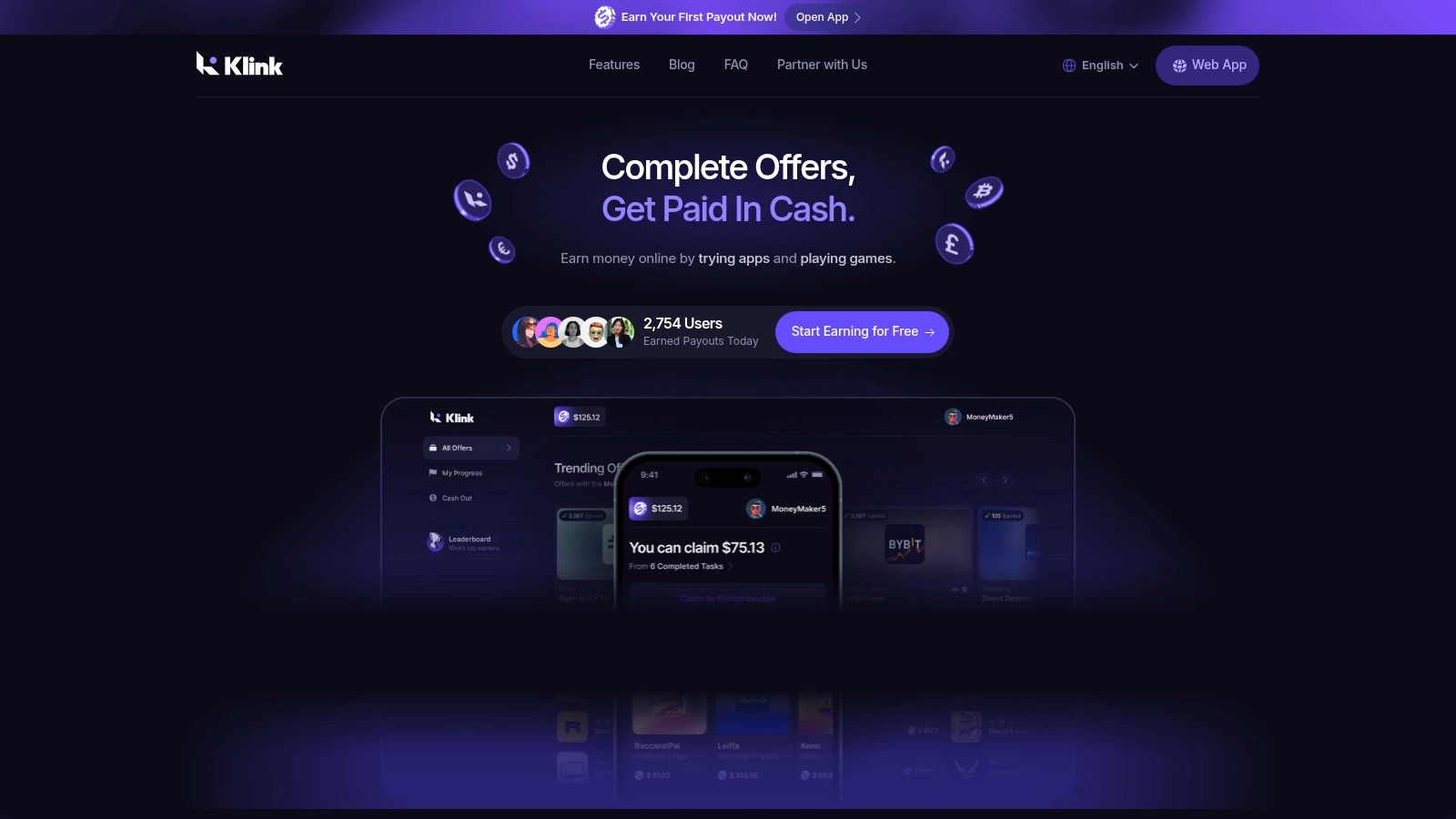
Want one app that shows how earning apps work in Europe in 2026 without forcing you to learn five systems at once? Klink Finance is a practical starting point for that. It combines partner offers, app installs, games, surveys, and social tasks in one place, which makes it easier for beginners to test different earning methods and see what fits their country and time budget.
What makes Klink relevant in this guide is not hype. It is the format. Offer-based platforms can be a better fit than survey-only apps for European users because availability often shifts by country, device, and campaign demand. If surveys are thin in your market, app trials or game tasks may still show up.
Why Klink Finance stands out
Klink is straightforward. Advertisers pay for trackable actions such as installs, registrations, and in-app engagement. The platform shares part of that value with users.
That setup feels clearer than many generic reward walls. You can usually see the required action, check whether the task tracked, and decide quickly if the payout looks fair for the effort.
A few things make it useful for beginners:
More than one earning route: If one category is weak, you can switch to another instead of closing the app.
Progress visibility: Tracking matters on offer platforms because missed credit is one of the fastest ways to waste time.
Cross-device access: Web, iOS, and Android support make it easier to complete offers on the device that works best.
Flexible payout options: That is helpful in Europe, where payment preferences vary a lot by country.
If you want to compare survey-focused options after testing Klink, this roundup of highest paying survey apps in 2026 is a useful next step.
Practical rule: Use Klink for quick, high-clarity offers first. Skip anything with vague terms, heavy data permissions, or a payout that looks too small for the steps involved.
What to watch out for
Klink works best as part of a stack, not as your only app. Earnings move up and down based on your country, the offers live that week, and whether you qualify for them. A user in Germany, France, or the UK may see a healthier feed than someone in a smaller market.
There is also a basic skill to using apps like this well. Read the requirements before you tap. Check whether an offer is for new users only. Take screenshots when a task has multiple steps. If an app wants broad permissions that do not match the reward, pass on it.
That is the trade-off. Klink gives you variety and a low barrier to entry, but you still need to filter for value. For beginners in Europe, that is a fair exchange. It helps you learn which offers track properly, which categories are worth repeating, and how much your local market supports before you commit more time.
2. Prolific
Prolific is one of the few survey-style platforms that people often keep using after the first month. That says a lot. Most survey apps burn users out fast because too many invites end in disqualification.
Prolific feels different because it focuses on research studies rather than the usual low-quality survey wall experience. You usually get a clearer time estimate, and the work tends to feel more purposeful.
Where Prolific works best
This is a good fit if you want paid research from your laptop or phone without local travel. It’s especially useful for students, remote workers, and anyone who can respond quickly when studies appear.
The best part is not that it’s constant. It isn’t. The best part is that when work shows up, it often feels more fair than what casual survey apps offer.
If you want more survey-specific options to compare, Klink’s roundup of highest paying survey apps in 2026 is a useful next read.
Prolific is better for patience than volume. If you need nonstop tasks, you’ll probably get frustrated.
The real trade-off
The weakness is simple. Supply can be bursty. You may have a strong day and then a quiet stretch.
That doesn’t make it bad. It just means Prolific works better as a premium side app than a primary income app. Keep notifications on, fill out your profile carefully, and take the well-matched studies when they appear.
It’s one of the cleaner platforms in this category, and that alone gives it an edge.
3. Clickworker
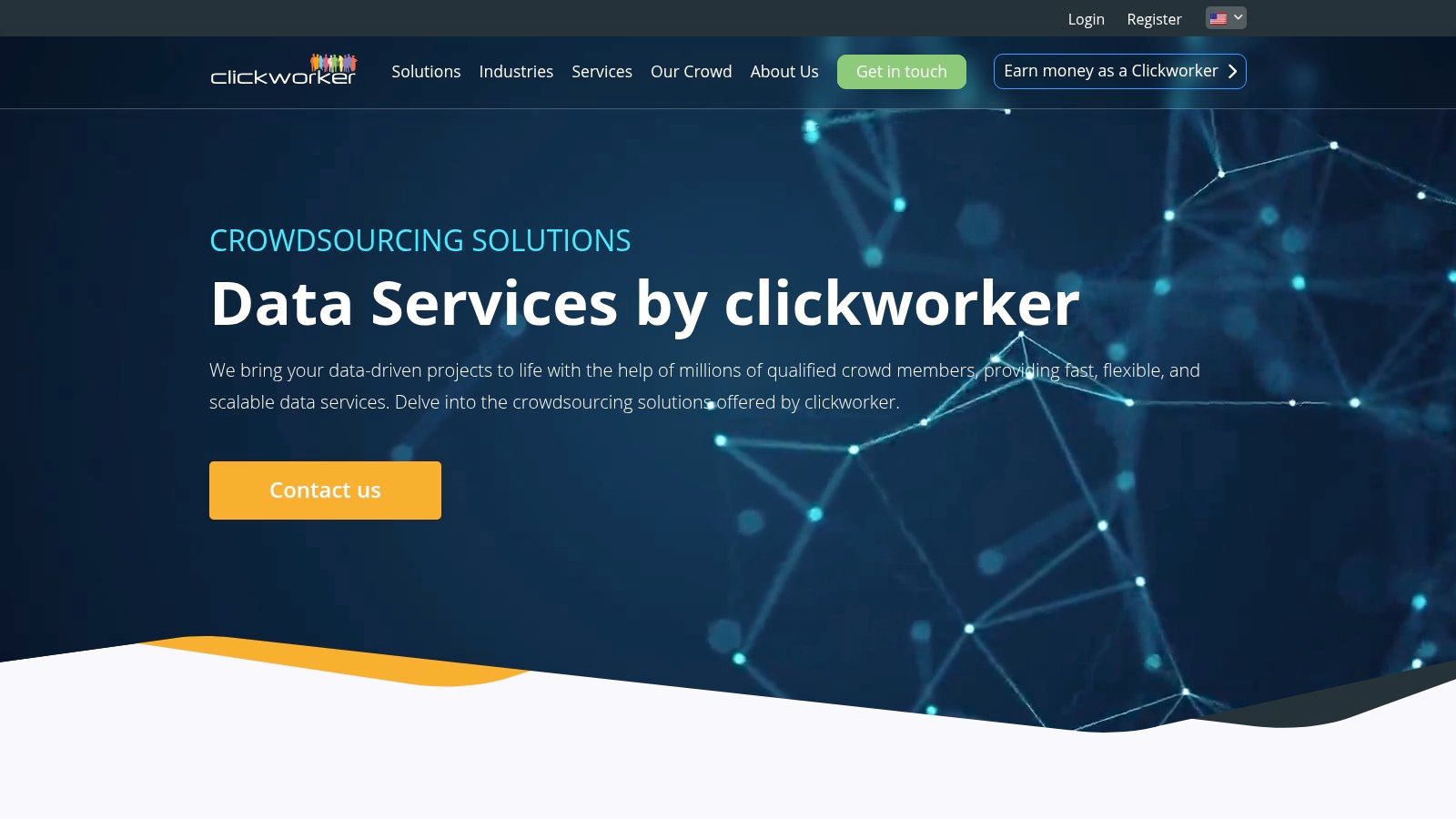
Clickworker sits in a different lane from standard survey apps. It’s a microtask platform, so instead of waiting for opinion polls, you’re more likely to see tasks involving text, image, audio, research, and platform-specific work.
That mix is useful if you get bored easily. It also helps if you prefer short tasks you can batch between other things.
What makes it practical
Clickworker’s main strength is rhythm. You can log in, do a few tasks, leave, and come back later. That makes it easier to fit around work, study, or commuting.
It’s also a decent option for people who want to stack several smaller income apps. If your goal is to fill idle time with quick paid tasks, this model makes sense.
For UK readers exploring task-focused platforms, Klink’s guide on getting paid to complete tasks pairs well with Clickworker.
What doesn’t work well
The downside is that earnings can feel patchy by country and task type. Some users get a regular stream. Others mostly see scraps.
That’s normal with microtask platforms. Your best move is to sign up, complete every profile and qualification step, and judge it by your own task feed over a few weeks. Don’t judge it by day one.
Clickworker is useful when you treat it like a filler app. It’s less convincing if you expect steady, high-paying work every day.
4. Toloka
Toloka is a data-labeling and evaluation app, which sounds technical but often isn’t. A lot of the work comes down to judging relevance, classifying content, checking images, or following clear instructions.
If you like structured tasks more than open-ended surveys, Toloka can be easier to stick with. You know what the app wants. You either do it accurately or you don’t.
Best use case for Toloka
Toloka suits people who are methodical. If you’re patient, detail-oriented, and okay with repeating similar tasks, it can be less irritating than general reward apps.
Qualification steps matter here. Better tasks usually become available after you prove you can follow the rules.
Good fit: People who like repetitive but clear work.
Less ideal: People who want fast, flashy offers and instant variety.
Best habit: Do a few training or qualification tasks carefully instead of rushing through everything.
The catch
Task flow can vary by language, region, and profile. When it’s active, it feels efficient. When it’s slow, it can feel empty.
That means Toloka is best used as part of a wider setup. Open it when you want focused work, not when you need guaranteed daily earnings.
For the right personality, though, it’s one of the steadier-feeling apps in the non-survey category.
5. Roamler
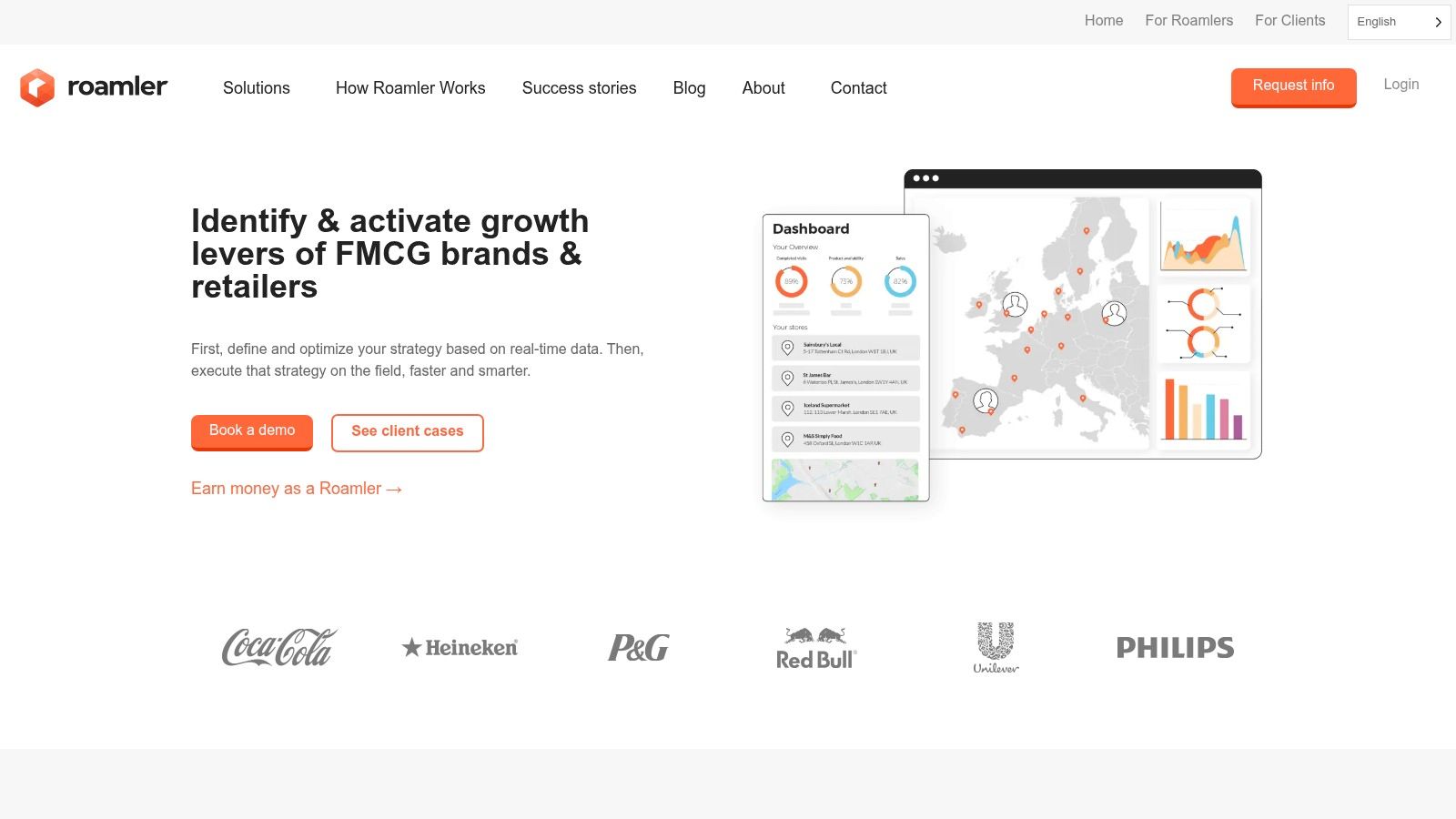
Roamler is where earning apps stop feeling digital-only. Instead of tapping through surveys at home, you go out and complete geolocated retail tasks such as shelf checks, display photos, promo checks, and local audits.
That makes it one of the more Europe-specific picks on this list. If you live in a city and already walk past supermarkets, drugstores, and petrol stations regularly, Roamler can fit naturally into your day.
Why some users earn better with Roamler
Retail task apps often work better for people who hate screen-outs. You go to the place, follow the brief, submit the proof, and move on.
That’s a big advantage over survey apps where you can waste time before getting rejected. Roamler’s model is more physical, but often clearer.
If you’re exploring app-based local hustles in the UK, Klink’s guide to side hustle apps in the UK for 2026 gives useful context.
If you’re urban, organized, and already out most days, Roamler can beat many home-only apps for time efficiency.
The trade-off in plain terms
You need the right location. Rural users usually won’t get the same value from this kind of app.
You may also need local language confidence, depending on the market and task instructions. And some countries have different onboarding quirks, including invite-based access.
Roamler is one of the better choices for people who’d rather complete one real-world task well than grind small digital tasks all evening.
6. BeMyEye
BeMyEye is another shop-and-earn app, but it feels slightly more beginner-friendly than some field-task platforms. The core idea is simple. You accept a nearby job, visit the location, take the requested photos or answer the short questionnaire, and submit.
That straightforward flow is why many casual users like it. There’s less mystery about what you’re supposed to do.
Where BeMyEye shines
This app works best in busy towns and cities. If there are plenty of stores around you, the app becomes more useful.
It also suits people who don’t want long commitments. You can fit a quick retail check into a lunch break, commute, or shopping trip.
A few practical advantages:
Simple task logic: Most jobs are easy to understand once you’ve done one or two.
Urban convenience: Good for users who already spend time in shopping areas.
Useful support flow: In-app clarification can help when a task brief is confusing.
Common frustration points
The main problem is inconsistency. One week may look active, the next may not.
Some users also report occasional payment delays. That doesn’t automatically make the platform untrustworthy, but it does mean you shouldn’t rely on any single field-task app as your only payout source.
BeMyEye is strongest when used casually and locally. If you treat it as bonus money attached to places you’re already visiting, it makes a lot more sense.
7. Field Agent UK and Europe
Field Agent is especially worth checking if you’re in the UK. It focuses on mystery shopping, retail checks, receipts, product reviews, and display compliance tasks.
I like this category because the pay logic is visible up front. You see the mission, the location, and what it asks for. That’s more honest than many “earn from your phone” apps that reveal the friction only after you start.
Why it works for some people
Field Agent can be a strong option if you enjoy practical errands. You don’t need special skills. You do need to follow instructions closely and submit clean proof.
This kind of app often feels better than standard surveys because the tasks are concrete. You’re checking a shelf, confirming a promotion, or buying and reviewing an item.
Why it won’t suit everyone
Area matters a lot. City users usually see more missions than rural users.
It’s also not a passive app. You need to move, pay attention, and sometimes work within a deadline. That’s great if you want active side income. It’s not ideal if you want to earn entirely from the sofa.
Field Agent is a good reminder that some of the best earning apps europe 2026 are less about endless screen tapping and more about simple, real-world jobs done well.
8. AttaPoll
AttaPoll is one of those apps that survives because it keeps things light. It doesn’t pretend to be a full income system. It gives you mobile surveys, a low-friction setup, and quick cash-out appeal.
That makes it good for casual earners, especially beginners who want to test the category without committing much time.
The good part
AttaPoll is easy to understand. Open app, check survey, see rough match, try it, cash out when eligible.
For a lot of people, that’s enough. The app works well in small spare moments like train rides, queues, or evenings when you don’t want a complicated task.
Don’t chase every survey. Open the higher-fit ones first and leave low-match invites alone unless you’re experimenting.
The bad part
Like almost every survey app, disqualifications are common. You can still earn, but you need the right expectations.
AttaPoll is best for micro-earnings and fast casual use. It’s not where I’d send someone who wants the highest possible return per hour. It’s where I’d send someone who wants something simple that pays without much setup.
If you’re patient with screen-outs, it’s a handy app to keep installed.
9. YouGov
YouGov is not the flashy pick on this list. It’s slower, more points-driven, and less exciting than rapid-fire cash-out apps.
But it has one big advantage. It feels established. For some users, that trust factor matters more than speed.
Best reason to use YouGov
Use YouGov if you prefer a slower, steadier panel over random reward walls. It’s also useful if you like opinion research and don’t mind building up rewards over time.
The platform can include surveys, panel activity, and sometimes more valuable invitations depending on your profile and region. It’s not built for instant gratification.
The downside beginners should know
Redemption often feels slower than on lighter survey apps. If you need fast wins to stay motivated, YouGov may feel too gradual.
Still, some people prefer that. They’d rather answer fewer surveys on a recognizable panel than chase every small offer across multiple apps.
YouGov isn’t the best “quick money” app. It is one of the more reasonable “long-term background earner” apps.
10. Qmee
Qmee is popular for one very practical reason. It’s built around low-friction withdrawals and quick survey access. That matters more than people think.
A lot of apps look fine until you try to cash out. Qmee’s appeal is that it reduces that anxiety. For cautious beginners, that’s a real selling point.
Who should use Qmee
Qmee is good for people who want short survey sessions and fast exits. If you earn a little, you want to be able to take that little without waiting forever.
It also works well as a spare app in your stack. If Prolific is quiet and your task apps are empty, Qmee can fill small gaps.
A few reasons people keep it around:
Low cash-out friction: Good for risk-averse users who don’t want money trapped in an app.
Simple format: Surveys and occasional shopping-style offers are easy to grasp.
Useful backup role: It’s often more valuable as a secondary app than a main one.
What to be careful about
The usual survey problems still apply. Disqualifications happen. Some users also report occasional payout or connection hiccups.
That’s why I’d cash out promptly and avoid building up a large balance. Qmee is strongest when you use it lightly, withdraw regularly, and move on.
Top 10 Earning Apps in Europe (2026) Comparison
Platform | Core features | UX & reliability | Value proposition / Typical earnings | Target audience | Payouts & fees |
|---|---|---|---|---|---|
Klink Finance (Recommended) | Partner offers: apps, games, surveys, social quests; daily curated tasks; real‑time tracking; web/iOS/Android | Transparent live earnings, large community, proven payouts ($134K+ to 30k+ users) | Performance‑based revenue share; passive ~$100+/mo, active up to ~$1,000/mo | Global casual earners, crypto users, power microworkers | Fiat & crypto (USD, EUR, GBP, BTC, ETH, SOL +); instant/fast withdrawals; per‑task rates vary |
Prolific | Academic & product studies; time estimates; researcher pay guidance | High‑quality studies; lower screen‑outs; bursty supply at peak times | Generally fair hourly rates (often ≥£6/$8 per hour) | Respondents seeking better pay and study quality | PayPal/Hyperwallet; min approved balance and occasional manual checks |
Clickworker | Microtasks: text/image/audio, web research; optional UHRS | Established operator; frequent short tasks; reliable cadence | Flexible small‑task income; fits around other work | Flexible earners who want varied microtasks | PayPal, Payoneer, SEPA/ACH; weekly bill runs; minimum payout thresholds |
Toloka | AI/data‑labeling, classification, mobile app, qualification flows | Clear instructions; fast credit on approval; steady AI focus | Steady annotation work for AI/ML; higher pay with qualifications | Annotators, data‑labeling contributors, tech‑savvy workers | Immediate crediting on approval; web & Android payouts (regional rails vary) |
Roamler | Geolocated retail audits & mystery shops; real‑time nearby tasks | Clear in‑store tasks; EU coverage; rolling visibility | Higher per‑task pay for in‑store gigs; travel‑friendly across EU | Urban field workers, mystery shoppers, travelers in EU | PayPal cash‑outs; country‑specific fee rules |
BeMyEye | In‑store photo tasks, quick polls, mystery shops; proximity jobs | Simple submit flow; widely used in EU; in‑app support | Quick local gigs for urban users; straightforward workflow | Urban earners looking for quick retail tasks | PayPal payouts; reportedly fast processing (varies by market) |
Field Agent (UK/Europe) | Geolocated missions with set pay; receipts, price & display checks | Reputable brand; clear pay amounts; strong UK demand | Real‑world tasks often pay better than short online surveys | UK‑based mystery shoppers and retail auditors | In‑app wallet cash‑outs (UK); region‑specific mechanics |
AttaPoll | Short mobile surveys; mobile‑first UX; low payout thresholds | Fast, grab‑and‑go surveys; high screen‑out rate common | Predictable micro‑earnings; suitable for casual quick cash | Casual survey takers wanting frequent small payouts | PayPal/Revolut; very low minimum (~$3) |
YouGov | Points‑based panel; surveys, passive research, focus groups | High trust and compliance; stable long‑term panel | Long‑term panel rewards; occasional premium invites | Users preferring reputable research panels | Points redeemable for cash or gift cards; higher redemption thresholds |
Qmee | Surveys & offers; browser + app; instant cashout focus | Ultra‑low friction withdrawals; occasional connectivity hiccups | Ideal for micro‑earnings and instant access to funds | Micro‑earners who want instant payouts | Instant PayPal/Venmo/gift cards often with no minimum; cash‑out reliability can vary |
Making It Worth Your Time Final Tips and FAQs
Earning extra cash from apps in Europe is possible, but the people who do best usually stop treating these apps like lottery tickets. They treat them like a system. That means picking the right app for the right situation, protecting personal data, and knowing when a task isn’t worth it.
One thing Europe-specific guides often miss is the compliance side. Spocket’s write-up on earning online in Europe points out that generic app lists often ignore GDPR-related payout and privacy issues, even though EU enforcement has tightened. In plain English, that means you shouldn’t only ask “how much does it pay?” You should also ask what data the app wants, why it wants it, and whether you’re comfortable giving it.
How to earn more without burning out
The best approach is stacking, not obsessing. Use one app for offers and app tasks, one for better-quality studies, one for microtasks, and maybe one local retail app if you live in a city.
Don’t sit there refreshing one platform all day. That usually leads to frustration and very little extra money.
A better routine looks like this:
Check high-value apps first: Look at Prolific, Klink Finance, and local field-task apps before low-paying survey walls.
Batch similar work: Do surveys in one session, local errands in another, and microtasks when you want focused screen time.
Track what actually pays: After two weeks, you’ll know which apps deserve your time in your city and profile.
Cash out regularly: Small, regular withdrawals reduce risk and keep motivation up.
Protect your profile quality: Inconsistent answers, rushed submissions, and poor photos can get tasks rejected.
Reality check: The fastest way to waste time is chasing every task equally. Some offers are worth doing. Some only feel productive.
What beginners usually get wrong
The first mistake is expecting one app to do everything. It won’t. Survey apps are good for convenience, not always value. Local task apps can pay better for your time, but only if you live near enough jobs. Offer platforms can be excellent when tasks track properly, but weak when your region has limited campaigns.
The second mistake is ignoring availability by country. An app that feels great in London or Berlin may feel dead in a smaller town. That’s why this topic needs a Europe-specific view, not just a global top-10 list copied from a US article.
The third mistake is forgetting taxes and records. If you use several apps consistently, save payout emails, screenshots, and account summaries. Even small side income is easier to manage when you keep a clean record from the start.
How to spot red flags
A legit earning app usually explains what you need to do, how you get paid, and what can cause rejection. If those basics are unclear, walk away.
Watch out for these warning signs:
Vague payouts: If the app hides reward terms until late in the process, that’s a bad sign.
Pressure to spend first: Be careful with offers that push unnecessary purchases just to obtain earnings.
No useful support path: If a task fails to track and there’s no clear help process, trust drops fast.
Excessive permissions: Don’t hand over contacts, full device access, or personal documents unless there’s a clear reason.
Overhyped income claims: Serious apps explain tasks. Weak apps sell fantasies.
FAQs
Which earning app is best for beginners in Europe
Klink Finance is a strong beginner option because it combines several earning methods in one place. If you want something even simpler, AttaPoll or Qmee are easy starting points.
Which apps are better for city users
Roamler, BeMyEye, and Field Agent usually make more sense in cities because they rely on nearby retail locations and foot traffic.
Are survey apps still worth using in 2026
Yes, but only if you use them selectively. Prolific is usually better for quality, while AttaPoll and Qmee are better for quick casual use.
Can these apps replace a full-time income
Generally, no. They’re better for extra cash, side money, and filling spare time productively.
What’s the safest way to use earning apps
Use strong passwords, cash out regularly, read permission requests carefully, and avoid apps that are vague about data use or payout rules.
Should I use one app or several
Several. A small stack usually works better because task supply changes by day, city, and country.
What if an app has no tasks in my area
Move on quickly. Don’t force it. Some platforms depend heavily on location, while others work better remotely from anywhere.
If you want one place to start without overcomplicating things, try Klink Finance. It gives you a simple way to earn from app offers, games, surveys, and social tasks, with flexible payouts and clear task tracking that suits beginners and experienced side-hustlers alike.

High Quality Offers,
Real Payouts
Start Earning with Klink Now!






Share Article
Related Articles
Read more, Earn more